


'Work-Related': The relationship between work stress & working postures
- Ryan Shivpaul

- Sep 18, 2024
- 3 min read
Updated: Sep 24, 2024
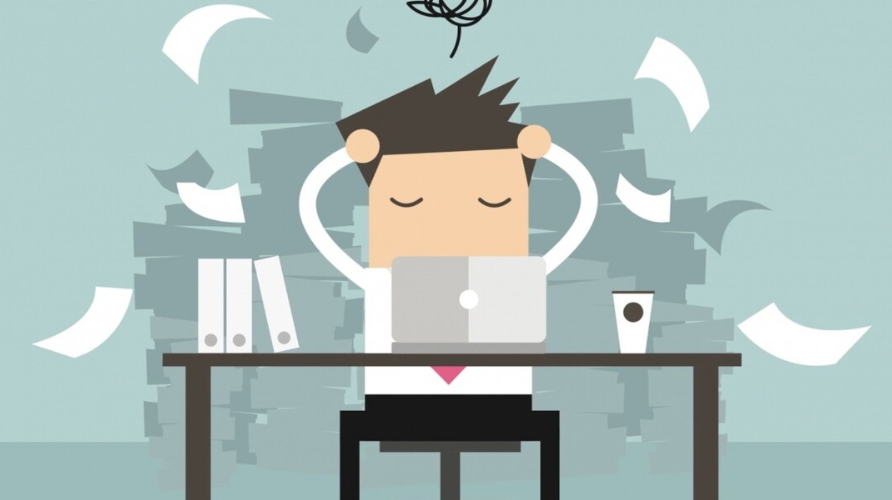
Mental health has quickly (and fortunately) climbed to the forefront of many professional societies, and more than ever, has become a larger focus when attempting to keep a healthy working population. Every individual has different experiences throughout a given day, and even over a life time; everyone has their own story to tell. Unfortunately, there are times when we do not get a chance to tell our story, talk about our day and release some pressure. We may end up stuck in the office, writing reports, crunching numbers, worrying about deadlines; feeling the stress.
27% of Canadian workers, that’s 5,124,600 people, claim to experience extreme levels of work stress on a daily basis (Infographic: Work-Related Stress, 2017). On a larger scale, 46% of Canadian workers report experiencing a form of on-going work stress on a day-to-day basis; with 62% of these workers reporting ‘work stresses as their main source of stress. (Infographic: Work-Related Stress, 2017).
The concept of work stress resulting in negative emotional states such as anxiety and depression has become fairly common knowledge in modern society, however, the mechanisms in which work stress alters the body physically are not as frequently discussed. This raises the question, how does work stress manifest physically in the human body, and does it affect working postures? Or rather, how much does work stress result in tense shoulders, stiff spines, and smiles slowly fading away?

We strive to maintain a safe working culture in many companies across the globe, yet when it comes to examining how much working culture may be affecting one’s wellbeing, it is simply glossed over. Whether this is the result of the ‘nose to the grindstone’ culture so many of us embrace in today’s society, or the result of it becoming a taboo topic, it is worth discussing!
Do you ever experience chronic headaches, back pain or even intermittent jaw problems? Believe it or not, work stress is most definitely a candidate for the cause. Work stress can impact individuals physiologically; altering blood pressure, contributing to cardiovascular disease (CVD) and diabetes (Wilkes et al., 2017). Research has also shown work stress is linked with working postures; i.e. hyperkyphosis (slumped-back) and anterior pelvic tilt (Rosário et al., 2016). These are common postures associated with muscular imbalances observed in cases of neck, shoulder, back and hip pain.

According to two studies performed in 2016 and 2019 respectively, negative emotional states such as anger and sadness as a result of work correlate to alterations in posture. While chronic states of sadness produced consistent postures including rounded shoulders, (Hackford et al. 2019), another emotion experienced in the work place such as anger resulted in increased shoulder angles as well as hyperextension of the knee and shoulder protraction (Rosário et al., 2016). The aforementioned postural alterations are commonly observed in those with low back pain as well as shoulder and knee injuries!

Slumped posture is a diagnostic indicator of depression (Wilkes et al., 2017). Research conducted by Rosario et al., 2019, expanded upon this by demonstrating a direct correlation between depression levels and angles of the head and shoulders; higher levels of depression resulting in a protruded head posture and heightened shoulders.
Interestingly enough, it seems conditioning the body through regular exercise and physical activity may be a strong method of helping individuals combat the negative physical effects of work stress. Studies have shown a conscious effort to maintain good working postures in the presence of work stress can actually curtail negative physiological effects! In specific, individuals who maintain upright postures in times of stress can illicit higher self-esteem and perceived mood than individuals with slumped posture (Nair et al., 2015). On the other hand, it appears individuals who maintain slumped postures throughout negative experiences illicit even more negative emotional states and first-person singular pronouns (Nair et al., 2015).
In other words, it seems your attitude does determine your altitude, so to speak!
While there appears to be a correlation between work stress and working postures, gaining perspective on the true magnitude of the relationship remains a complex task. Posture can also be affected by muscle imbalances as a result of physical activity and physical trauma. Despite this, conditioning the body to instinctively maintain upright, neutral postures indeed has a positive effect on emotional state and vice-versa. It seems as though at the end of it all, exercise really is the best ‘medicine’, and striving for physical activity is important as ever in being able to deal with work stress.
So go ahead, spare a kind word and make someone’s day. Who knows, you could be making an even bigger impact on their days to come too!


Comments